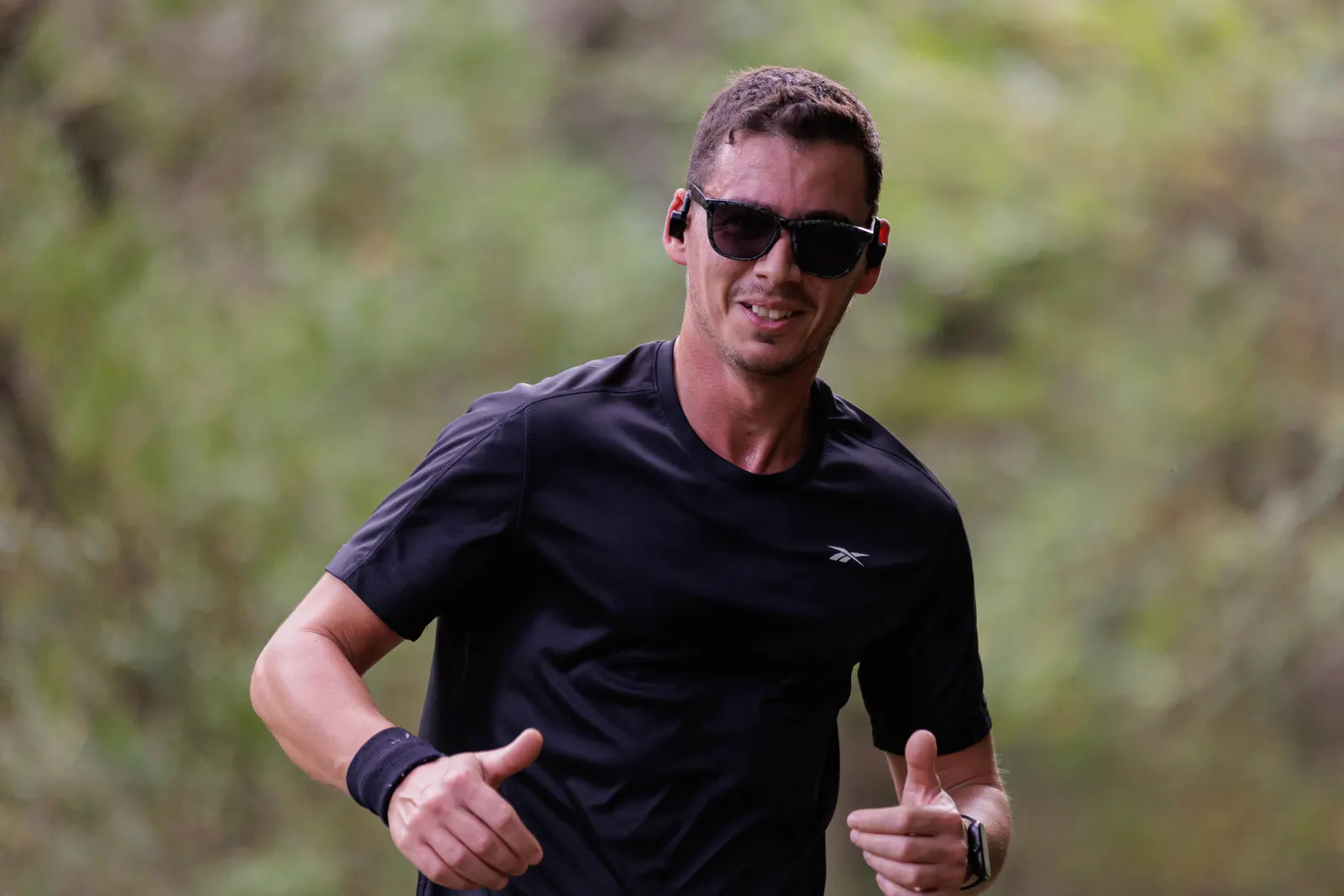
I’ve been staring at screens for a living for over ten years. This year I started running trails, mostly by accident, and it’s done more for my head than any productivity book I’ve ever half-finished. Not because it made me disciplined. Because it gave me an hour where work genuinely can’t reach me.
The laptop closes. The job doesn’t.
You know the feeling even if you’ve never put a name on it.
It’s seven in the evening. Laptop shut. You’re at the table, or walking somewhere, or your partner is telling you about their day. And somewhere in the back of your skull a process is still running: that race condition, or the schema decision you’re not happy with, or the bug that only ever shows up in production and never on your machine. You’re not working. You’re not not working either.
That’s the actual cost of this job, and it isn’t the hours. It’s that the work lives entirely in your head, and your head has no idea when to stop. There’s nothing to put down. A carpenter hangs up the saw. We just close a lid and carry the whole thing home with us, because it was never anywhere else to begin with.
Then there’s what a normal day does to the body. Eight hours in a chair, shoulders creeping forward, eyes locked at the same sixty centimetres, attention sliced across Slack and tabs and whatever else is pinging. Then we shut the laptop and look at a smaller screen until we fall asleep.
Burnout gets talked about like it shows up one morning out of nowhere. In my experience it just accumulates, very quietly, from never properly switching off.
Why a trail and not a treadmill
I tried the normal stuff first. The gym’s fine. Road running’s fine. But both leave too much of your brain idle, and idle brain goes straight back to the thing you were trying to get away from. I’ve finished a 10k on tarmac having mentally restructured an entire module on the way round. Technically that’s exercise. Realistically it’s unpaid overtime with sweat.
A trail won’t let you do that.
The ground is different under every step. Roots, loose stones, a rut hidden under dead leaves, a turn that’s way steeper than it looked from below. You can’t zone out, because the second you do you’re on the floor. Your attention gets dragged into the next three metres in front of your feet and it stays there.
Sounds stressful. It’s the exact opposite. For the first time since breakfast my attention has one job.
That’s the bit I didn’t see coming, and it’s the bit I’d miss most. You can’t check a message while picking a line through rocks. There’s no multitasking available on a descent. The trail hands you a kind of single-threaded focus that the rest of modern life has basically stopped offering, and it doesn’t ask for any willpower to get it. It just makes everything else impossible.
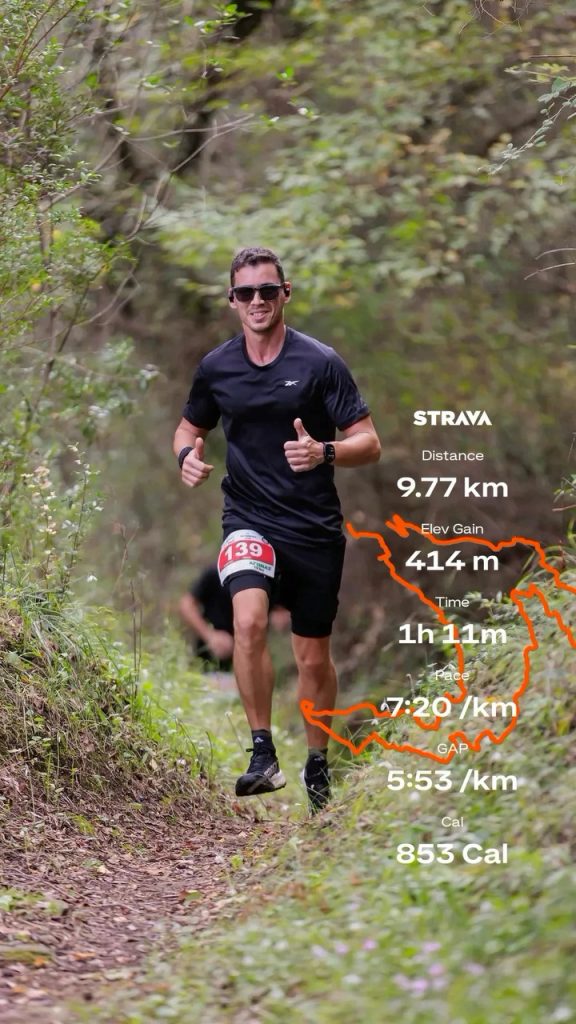
*Somewhere north of Corfu town. Nothing to solve here except the next three metres.*
The weird part
I don’t think about work out there. There’s no room for it.
And yet I keep getting back to the car with the answer to something that had me stuck for two days.
Not a vague hunch. The actual answer. Oh, that’s what’s invalidating the cache. Or, more often and more annoyingly: I’ve been solving the wrong problem this whole time, and the right one is two layers up and about a third of the work.
If you’ve ever fixed a bug in the shower you already know how this works. Hard problems don’t usually fall over because you stared at them harder. They fall over after you stop, once the background process finally gets some quiet and a bit of CPU. Our instinct when we’re stuck is to push: one more hour, another coffee, read the same file again. Mostly that just digs the rut deeper.
Walking away isn’t a break from solving it. Half the time it’s the part that does the solving.
What the trail adds is that it doesn’t feel like skiving. There’s no guilt in it. You’re not avoiding the problem, you’re going up a hill, and the answer turns up as a side effect. Which, in my experience, is the only way answers ever turn up.
The one thing I refuse to optimise
Measuring things is the job. Response times, bundle size, coverage, error rates. It’s a good instinct at work and a terrible one everywhere else, and it follows us home. I know a few developers who turned running into another dashboard to improve and then quietly stopped going.
I do log my runs, and yes, I look at them. But on the trail I’ve given myself permission not to care. Some days I’m slow. Some days I walk the steep bits, which is most days. Some days I just stop because the light’s coming through the olive trees in a way that deserves thirty seconds, and there is no metric anywhere that gives me points for it.
That permission is sort of the whole thing. Work is where stuff has to be efficient. If the place you go to recover also has targets, it’s not recovery, it’s a second job that pays nothing.
The other half is boring and physical. We’re not built for what we do to ourselves all day. A couple of hours a week on uneven ground works everything that sitting switches off: ankles, hips, balance, all the small stabilising muscles nobody trains deliberately. Your eyes spend an hour looking at things further away than a monitor. Honestly you notice it in your back long before you notice it in your fitness.
Start smaller than you think
If any of this sounds good, the bar is a lot lower than it looks from outside.
You don’t need to be a runner. Loads of people walk the climbs, including people who’ve been at this for years. You don’t need gear to start. A pair of shoes with some grip and a path that isn’t tarmac will tell you in one afternoon whether it’s your thing. No race, no plan, no goal. An hour on a path somewhere near you is the entire pitch.
I live in Corfu, so I’ve got it easy. Ten minutes out of town and you’re in hills and olive groves. But most places have something, even if it’s a forest track, a hill behind an industrial estate, a path along a river. It doesn’t need to be pretty. It needs to be uneven enough that you can’t think about work while you’re on it.
So go once. See if you come home with your shoulders lower than when you left. That’s the only metric I’d pay attention to.
I’m on Strava if you want to follow along, though I’d warn you the running itself is a lot less interesting than the reason I do it.
I’m a full-stack developer in Corfu, mostly Laravel, React and Next.js. I write here about building software, and now and then about the stuff that makes building software survivable.